When businesses need to move freight across long distances, trucking is often the first option that comes to mind. Trucks are flexible, widely available, and useful for door-to-door delivery. But for certain shipments, rail freight can be a smart and cost-effective alternative.
Rail freight shipping is especially useful for long-distance cargo movement, large-volume shipments, and intermodal transportation that combines rail efficiency with truck flexibility. For businesses moving goods across the country or transporting inland cargo after an international import, rail can play an important role in the logistics process.
Baum Shipping offers rail freight services designed to support long-distance shipping needs with scalable capacity, consistent delivery schedules, and multimodal coordination.
What Is Rail Freight Shipping?
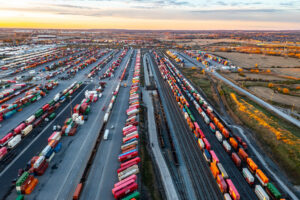
Rail freight shipping is the movement of cargo by train. Freight may travel in railcars, containers, or trailers depending on the type of shipment and route.
Rail is commonly used for long-distance transportation because it can move large amounts of cargo efficiently. Instead of relying only on trucks for an entire route, businesses can use rail for the long inland portion of a shipment and trucks for pickup and final delivery.
This is often called intermodal shipping.
How Rail Fits Into Intermodal Shipping
Intermodal shipping uses more than one transportation method to move cargo. In many cases, this means combining truck and rail.
For example, a truck may pick up freight from a warehouse and deliver it to a rail terminal. The cargo then moves by train across a long-distance route. Once it reaches the destination rail terminal, another truck handles the final delivery.
This approach allows businesses to use rail for the longer part of the journey while still relying on trucks for flexible local transportation.
Rail can also support international freight. Imported cargo may arrive at a seaport, move by drayage to a rail terminal, travel inland by train, and then continue by truck to a warehouse or distribution center.
For businesses that need inland movement after ocean freight arrival, rail can help connect ports to major markets across the country.
When Does Rail Freight Make Sense?
Rail freight is not the right fit for every shipment, but it can be a strong option in several situations.
When You Are Shipping Long Distances
Rail is often most useful when freight needs to travel a long distance. For shorter local or regional deliveries, trucking may be more practical. But when cargo needs to move across several states or from one coast to another, rail can offer a more efficient option.
Long-distance routes are where rail’s capacity and cost advantages can become more noticeable.
When You Are Moving Large or Heavy Shipments
Rail can be helpful for larger shipments that would be expensive or difficult to move entirely by truck. This may include industrial cargo, building materials, machinery, bulk goods, containers, or high-volume commercial freight.
Because trains can move significant amounts of freight at once, rail is often a good option when shipment volume is high.
When Cost Control Matters
For many businesses, transportation costs are a major concern. Rail freight may help reduce costs on certain long-distance shipments, especially when compared to moving the same cargo entirely by truck.
Pricing depends on many factors, including cargo type, route, distance, volume, equipment needs, and service requirements. However, when rail is available for the right route, it can be an efficient part of a broader freight strategy.
When Your Shipment Is Not Extremely Time-Sensitive
Rail freight can be dependable, but it may not always be the fastest option. If a shipment is urgent, air freight or dedicated trucking may be better.
Rail works best when businesses can plan ahead and allow enough time for terminal handling, rail scheduling, and final delivery coordination.
For shipments that are important but not emergency-level urgent, rail may offer a strong balance of cost, capacity, and reliability.
Rail Freight vs. Trucking
Rail and trucking both have important roles in freight shipping.
Trucking is usually the better option for shorter distances, tight delivery windows, remote locations, and shipments that need direct door-to-door service. Trucks offer flexibility and can reach places that rail cannot.
Rail is often better for long-distance, high-volume, or intermodal freight. It can be especially useful when cargo can move efficiently between major rail terminals.
In many cases, the best solution is not rail or trucking. It is rail and trucking working together. A freight forwarder can help determine when an intermodal approach makes the most sense.
What Types of Cargo Can Move by Rail?
Rail freight can support many types of cargo, depending on the route, equipment, and handling requirements.
Common rail freight may include:
- Containers
- Palletized goods
- Retail inventory
- Industrial materials
- Machinery
- Automotive parts
- Building materials
- Agricultural products
- Bulk commodities
- Imported cargo moving inland
Some shipments may require special planning, equipment, or handling. Oversized cargo, hazardous materials, fragile goods, or time-sensitive freight should be reviewed carefully before rail is selected.
Things to Consider Before Choosing Rail Freight
Before choosing rail freight, businesses should review the full shipment details.
Important questions include:
- How far does the cargo need to travel?
- Is there rail service near the origin and destination?
- Will trucking be needed before or after rail transport?
- How urgent is the delivery?
- What type of cargo is being shipped?
- Does the cargo require special handling?
- Are there packaging or loading requirements?
- Is the shipment domestic, international, or connected to ocean freight?
Rail can be a smart option, but the details matter. If the origin or destination is far from a rail terminal, additional trucking may be needed. If the cargo has strict timing needs, rail schedules should be reviewed carefully.
How a Freight Forwarder Helps Coordinate Rail Shipping
Rail freight often involves more than booking space on a train. It may require pickup scheduling, terminal coordination, rail carrier communication, drayage, documentation, tracking, and final delivery planning.
A freight forwarder helps connect these pieces so the shipment moves smoothly from origin to destination.
For intermodal shipments, this coordination is especially important. The cargo may move from truck to rail, then back to truck again. Each transfer needs to be timed properly to avoid delays.
Baum Shipping helps businesses coordinate domestic and international freight by air, ocean, land, and rail. Their rail freight services are built to support both domestic freight and inland cargo movement following international imports.
Why Choose Baum Shipping for Rail Freight?
Baum Shipping provides rail freight solutions for businesses that need dependable long-distance cargo movement. Whether your shipment is moving across the country or continuing inland after arriving from overseas, Baum can help create a logistics plan that fits your operational needs.
Baum Shipping can help with:
- Nationwide rail freight coordination
- Intermodal transportation
- Door-to-door rail freight service
- Truck and rail coordination
- Inland movement after ocean freight
- Long-distance cargo planning
- Freight forwarding support
Baum Shipping also supports broader freight needs through air, ocean, ground, warehousing, distribution, customs clearance, and specialty logistics services. This allows businesses to work with one experienced logistics partner instead of trying to coordinate multiple moving parts alone.
Baum Shipping is also:
- FMC 3230
- NVOCC Bonded
- IATA Certified
- TSA Certified
These certifications reflect Baum’s ability to support a wide range of freight forwarding needs, including domestic freight, international shipping, ocean freight, air freight, and regulated transportation requirements.
Is Rail Freight Right for Your Business?
Rail freight may be a smart option if your business needs to move cargo over a long distance, manage transportation costs, ship larger volumes, or connect port freight with inland destinations.
It may not be the best fit for every shipment, especially if delivery is urgent or the route does not align well with rail service. However, when the cargo, route, and timeline make sense, rail can be an efficient and dependable part of your logistics strategy.
The best way to know if rail freight is right for your shipment is to work with an experienced freight forwarding company that can review your cargo and compare available options.
Contact Baum Shipping for Rail Freight Services
Rail freight can help businesses move cargo efficiently across long distances, especially when paired with truck transportation for pickup and final delivery.
If your business is comparing ground freight options, importing cargo that needs to move inland, or looking for a more scalable long-distance shipping solution, Baum Shipping can help.
Contact Baum Shipping today to learn more about rail freight shipping, intermodal transportation, and freight forwarding solutions designed to keep your cargo moving.