Transporting standard freight is relatively straightforward, but what happens when your cargo is too large, too heavy, or too complicated for conventional shipping equipment?
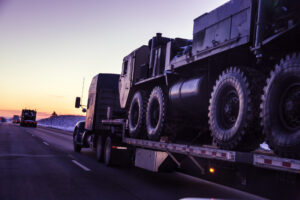
For businesses moving industrial machinery, construction equipment, oversized vehicles, and other specialized cargo, transportation requires additional planning, equipment, and regulatory considerations.
In a major logistics hub like Los Angeles, oversized and overweight freight shipping plays an important role in supporting manufacturers, construction companies, importers, and industrial operations.
Understanding how specialized freight transportation works can help businesses avoid unnecessary delays, control expenses, and move valuable equipment safely.
What Is Oversized and Overweight Freight Shipping?
Although the terms are often used together, oversized and overweight freight describe different transportation challenges.
Oversized freight refers to cargo that exceeds applicable legal transportation dimensions, including width, height, or length.
Overweight freight involves cargo that exceeds permitted vehicle weight limitations, which may include gross vehicle weight, axle weight, or other applicable restrictions.
Some shipments qualify as both oversized and overweight.
Common examples include:
- Industrial machinery and manufacturing equipment
- Construction vehicles and excavators
- Large generators and transformers
- Agricultural machinery
- Oversized boats and marine equipment
- Heavy structural components
- Specialized commercial vehicles
These shipments frequently require transportation solutions beyond conventional freight trailers.
Why Is Oversized Freight Shipping More Complicated in Los Angeles?
Los Angeles is one of the country’s most important freight transportation markets, with access to major ports, international airports, highways, and distribution centers.
However, moving unusually large or heavy cargo throughout Southern California presents unique logistical challenges.
Road and Infrastructure Restrictions
Not every road can safely accommodate oversized transportation equipment.
Low bridges, narrow roadways, restricted turns, and weight-limited infrastructure may prevent certain shipments from traveling along otherwise convenient routes.
Port Transportation Requirements
Cargo arriving through the Port of Los Angeles or Port of Long Beach may require specialized equipment and carefully coordinated pickup arrangements.
Terminal access, container weight, equipment availability, and delivery appointments can all influence the transportation plan.
Traffic and Scheduling Considerations
Southern California’s busy transportation network can create additional challenges for heavy haul shipments.
Certain permitted loads may face restrictions on travel times or routes, making advance scheduling especially important.
Do Oversized Loads Require Special Permits in California?
Many oversized and overweight shipments require transportation permits before traveling on public roads.
The California Department of Transportation, commonly known as Caltrans, oversees special transportation permits for qualifying oversized and overweight vehicles operating on state highways.
Depending on the shipment, permits may address:
- Maximum allowable dimensions
- Vehicle and axle weight restrictions
- Approved transportation routes
- Authorized travel schedules
- Pilot or escort vehicle requirements
- Specialized equipment conditions
Caltrans generally requires loads to be reasonably non-divisible to qualify for oversized or overweight transportation permits.
Businesses should also understand that state permits do not automatically authorize transportation on every local road. Additional city or county approvals may be necessary depending on the route.
Working with experienced transportation professionals helps businesses identify applicable requirements before scheduling a shipment.
How Does Heavy Haul Freight Transportation Work?
Transporting oversized cargo typically involves several coordinated stages.
1. Evaluate Cargo Dimensions and Weight
Accurate measurements are essential.
Transportation planners need the cargo’s length, width, height, weight, and any special handling requirements.
Incorrect measurements can result in unsuitable equipment, permitting complications, or delays.
2. Select Appropriate Transportation Equipment
Different shipments require different equipment.
Depending on the load, specialized transportation options may include:
- Flatbed trailers
- Step-deck trailers
- Lowboy trailers
- Multi-axle heavy haul equipment
- Specialized containers or platforms
The appropriate selection depends on the cargo’s characteristics and transportation route.
3. Plan the Transportation Route
Route planning involves evaluating roadway restrictions, bridge clearances, weight limitations, and access to pickup and delivery locations.
For particularly challenging shipments, additional coordination may be required to establish an authorized route.
4. Coordinate Permits and Compliance
Before transportation begins, applicable permits and operating conditions must be confirmed.
Requirements may vary based on cargo dimensions, equipment configuration, and the jurisdictions involved.
5. Secure and Transport the Cargo
Proper loading and securement help protect the freight during transportation.
Specialized cargo may require custom blocking, bracing, or protective crating to reduce movement and damage risks.
6. Arrange Final Delivery
Oversized freight transportation does not necessarily end when the cargo reaches a warehouse or industrial facility.
Delivery teams may need to coordinate unloading equipment, site access, and installation schedules to complete the move.
What Affects the Cost of Oversized Freight Shipping?
The price of oversized freight transportation depends on several factors.
These include:
- Cargo dimensions and total weight
- Transportation distance
- Specialized trailer requirements
- Permits and escort services
- Loading and unloading equipment
- Route restrictions
- Cargo protection and insurance
- Delivery scheduling requirements
For example, transporting a large industrial generator across Southern California may require different equipment and planning than moving the same generator from the Port of Los Angeles to an inland manufacturing facility.
Because oversized shipments vary considerably, customized freight quotes are generally more useful than standard shipping estimates.
Common Oversized Shipping Mistakes Businesses Should Avoid
Several preventable mistakes can complicate specialized freight transportation.
Inaccurate Cargo Measurements: Incorrect dimensions or weights can cause equipment and permitting problems.
Insufficient Planning Time: Specialized carriers, permits, and approved routes may require advance coordination.
Overlooking Delivery Access: A shipment may reach its destination but encounter problems with narrow entrances, unloading space, or inadequate equipment.
Choosing Transportation Based Only on Price: The lowest quote may not account for specialized handling, permit requirements, or other necessary services.
Careful preparation can help reduce these risks.
Frequently Asked Questions About Oversized Freight Shipping
Can oversized cargo be shipped internationally?
Yes. Oversized equipment and heavy machinery can be transported internationally using specialized ocean freight, ground transportation, and other suitable shipping arrangements.
The available options depend on cargo dimensions, destination, and carrier capabilities.
How far in advance should oversized freight transportation be scheduled?
As early as practical. Complex shipments may require additional time for equipment availability, route evaluation, permitting, and coordination.
Can overweight shipping containers leave the Port of Los Angeles?
Certain overweight containers may qualify for transportation under applicable permit programs and operating restrictions. Eligibility depends on vehicle configuration, weight distribution, and approved routes.
Choose Baum Shipping for Oversized Freight Transportation in Los Angeles
Since 1984, Baum Shipping has provided domestic and international freight forwarding solutions for businesses with a wide range of transportation requirements.
With experience coordinating specialized freight, oversized cargo, heavy equipment transportation, and logistics planning, Baum Shipping helps businesses navigate shipments that require more than conventional transportation arrangements.
Its services include ground freight transportation, ocean freight forwarding, and custom crating solutions for specialized cargo.
Whether your business needs to transport industrial machinery, oversized commercial equipment, or heavy international freight, Baum Shipping can help evaluate the available transportation options.
Need oversized or overweight freight shipping in Los Angeles?
Contact Baum Shipping today to discuss your cargo requirements and request a customized freight transportation quote.